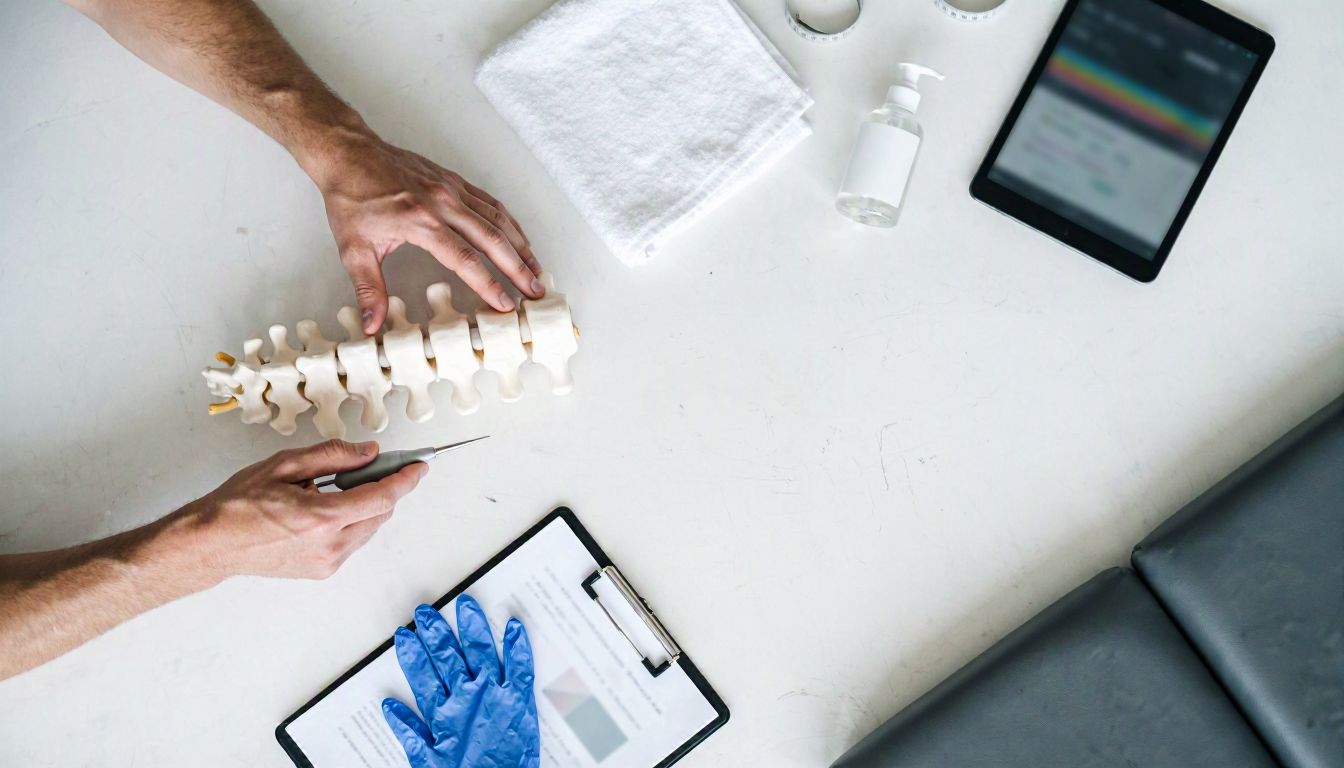
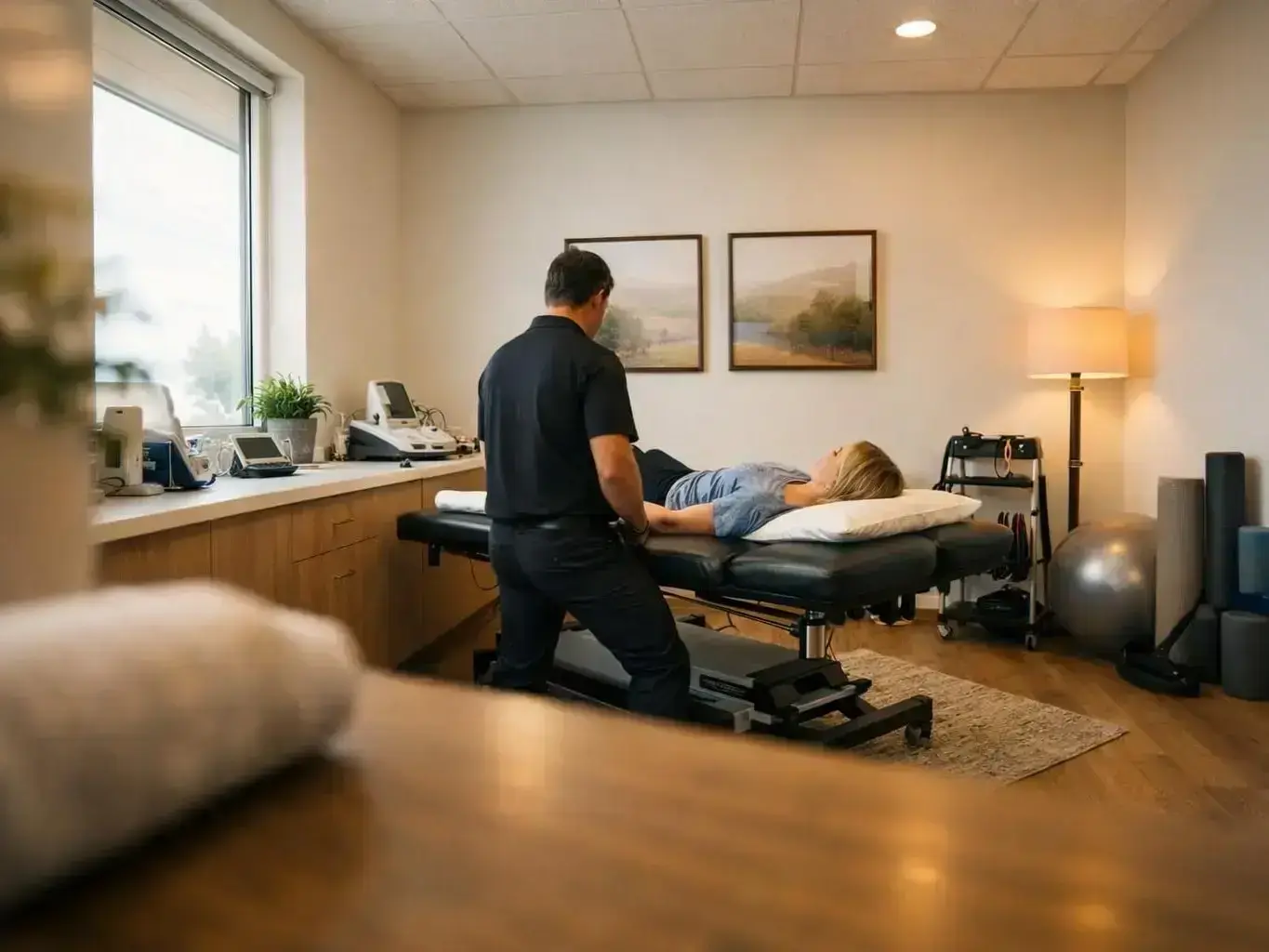
Spinal Manipulation is a hands-on treatment technique used by chiropractors and other trained healthcare providers to improve spinal movement and reduce pain. It involves applying controlled force to joints in the spine that have become restricted in their motion, often due to injury, poor posture. Or repetitive stress. The goal is to restore proper alignment, ease muscle tension. And support the body’s natural healing process.
Category
Chiropractic and manual therapy
Used for
Back pain, neck pain, headaches. And joint stiffness
Common confusion
Often mistaken for unsafe joint cracking or massage
Also called
Spinal Adjustment, High-Velocity Low-Amplitude (HVLA) Thrust
Often discussed with
Car Accident Injury Treatment, Neck Pain Treatment

Spinal manipulation helps fix spine and joint problems. Chiropractors do this most often. Some physical therapists and doctors do it too.
Related glossary terms: Chiropractic Adjustment, Joint Dysfunction, Acute Pain.
The provider gives a quick, controlled push to a stiff joint. This helps the joint move right again. It can ease pain and help you move better.
Many people feel better right away. Some may feel a little sore. This is like soreness after a new workout.
This treatment works on a simple idea. Stiff joints can cause pain and swelling. They can also make muscles tight.
Spinal manipulation helps joints move again. This lets the body heal itself. It can help without medicine or surgery.
It is often used with other treatments. These include stretching, exercise. Or soft tissue work. This helps recovery last longer.
It is usually safe. But it must be done by a licensed pro. They check your health and history first.
First, the provider checks your spine. They look for joints that don't move right. These are called restrictions or subluxations.
These stiff spots can cause pain. They can also limit how much you can move. The provider will target these spots.
They will put you in a certain position. This helps them reach the stiff joint. They use their hands or a small tool.
They give a quick, controlled push. This moves the joint more than usual. You might hear a popping sound.
This sound is normal. It happens when gas bubbles leave the joint. It's like cracking your knuckles. It doesn't mean harm.
The goal is to help joints move better. It can also calm irritated nerves. And it can ease tight muscles.
After the push, many feel looser. Some have less pain. Others move easier or have fewer headaches.
Results vary. Some feel better after one visit. Others need a few visits. The provider may give exercises too.
They might suggest changes in your daily life. This helps keep the benefits longer.

Spinal manipulation helps without surgery or drugs. It's a safe way to ease pain. It can help your back, neck. Or head hurt less.
Many like it because it helps the body heal itself. It can also stop future injuries. It does this by making joints work better.
This matters for people who move a lot. It also helps those with heavy jobs. It keeps muscles and ligaments from getting hurt.
Another good thing is it works with other treatments. It can be used with physical therapy or massage. This helps you heal faster.
It can also help with long-term problems. One example is arthritis. It can help manage pain better.
Fixing stiff joints early is key. It stops small problems from getting worse. This keeps you moving well over time.
Spinal manipulation helps with spine or joint pain. It can ease back pain, neck pain. Or headaches. It can also help joints hurt less after injuries.
It's good for people who sit a lot. Office workers can get stiff spines. This treatment can help them move better.
People hurt in car accidents may find it helpful. It can also help those hurt at work. It can ease pain and help them move again.
But it's not for everyone. People with weak bones should avoid it. So should those with spine problems.
It's also not safe if you have a broken bone. Or if you have an infection or tumor in your spine. A doctor will check if it's safe for you.
They will look at your health history. They may do tests or take pictures. This helps them decide if it's right for you.
If it's not safe, they can suggest other treatments. These might include gentle stretches. Or they might use ultrasound or small shocks.
Chiropractic Adjustment is a type of spinal manipulation performed specifically by chiropractors. While spinal manipulation can be done by other healthcare providers like physical therapists or osteopaths.
Massage Therapy focuses on relaxing muscles and improving circulation. While spinal manipulation targets joint movement and alignment in the spine.
Physical Therapy often includes exercises and stretches to improve strength and mobility. While spinal manipulation is a hands-on technique to restore joint motion.
Spinal manipulation is most effective when tailored to the individual’s specific condition and combined with active rehabilitation, such as stretching or strengthening exercises. Over-reliance on adjustments without addressing underlying habits or weaknesses can limit long-term benefits.
After a car accident, a patient visits a chiropractor complaining of neck stiffness and headaches. The chiropractor performs a spinal manipulation to restore movement in the restricted joints of the neck. After the treatment, the patient reports reduced pain and improved range of motion, allowing them to return to work and daily activities more comfortably.
Chiropractic Adjustment is a hands-on procedure where a licensed chiropractor applies controlled force to a specific joint, usually in the spine, to improve alignment, reduce nerve irritation. And restore normal movement. Adjustments are tailored to each patient’s condition and often produce a popping or cracking sound as gas escapes the joint.
Joint Dysfunction is a condition where a joint in the body doesn't move or function correctly, often causing pain, stiffness. Or reduced range of motion. It can result from injury, overuse, poor posture. Or underlying conditions like arthritis. Chiropractors and other healthcare providers assess and treat joint dysfunction to restore proper movement and reduce discomfort.
Acute Pain is sudden, sharp discomfort that lasts less than three to six months and acts as a warning signal from the body. Acute Pain typically starts after an injury, surgery. Or illness and fades as the body heals. It contrasts with long-lasting chronic pain and usually responds well to prompt treatment.
Chronic Pain is persistent discomfort lasting three months or longer, even after an injury or illness has healed. Unlike short-term pain, chronic pain continues beyond expected recovery time and may stem from conditions like arthritis, nerve damage. Or long-term muscle tension. It often affects daily activities and requires ongoing management rather than a quick cure.
Advanced Injury Care Clinic
Contact Advanced Injury Care Clinic for practical guidance on Spinal Manipulation and related chiropractor work in Nashville.