Understanding Herniated Disc

A herniated disc is a common spine problem. It affects the cushions between your spine bones. These bones are called vertebrae.
Related glossary terms: Sciatica, Nerve Compression, Lumbar Spine.
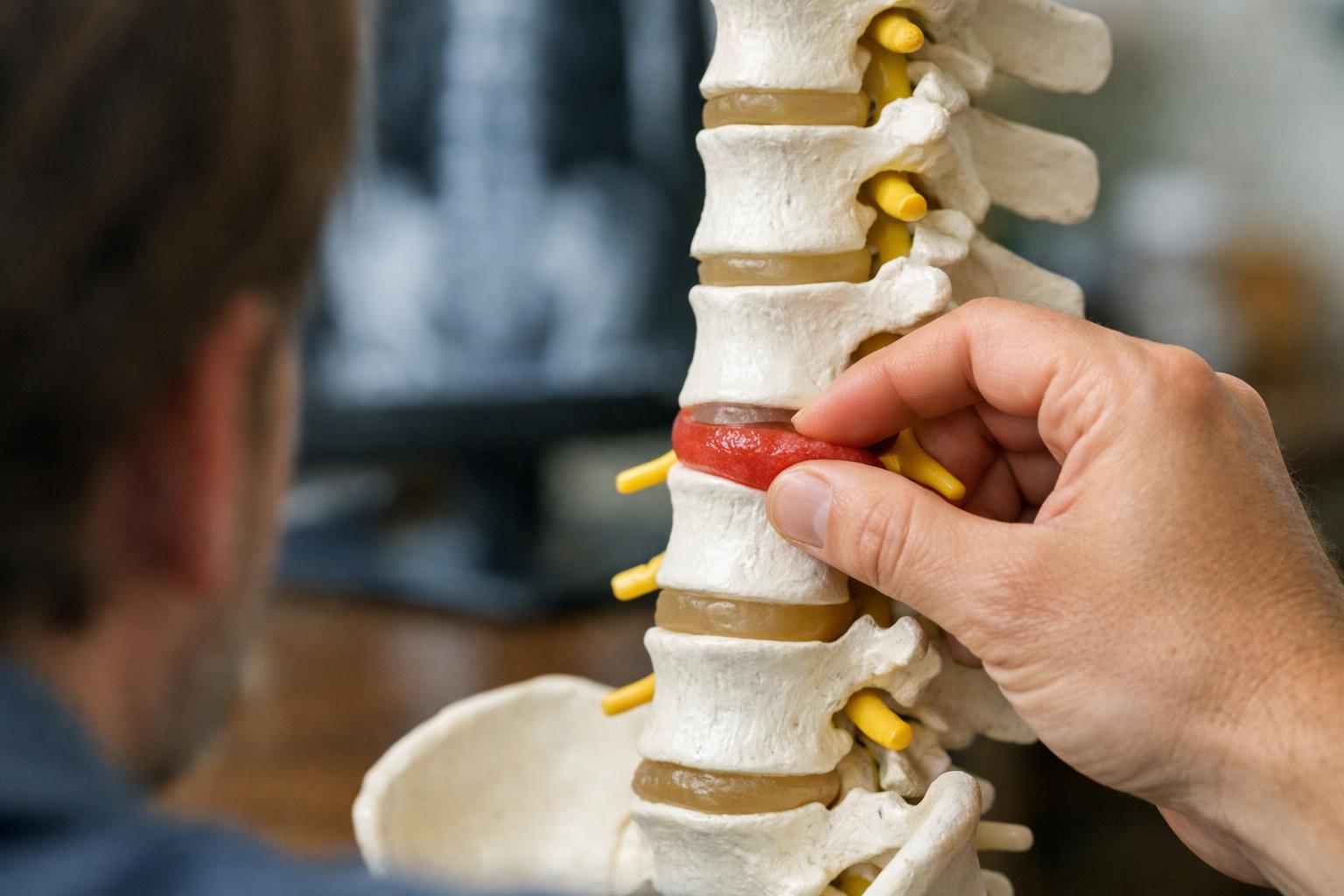
These discs act like shock absorbers. They help your spine bend and move smoothly. Each disc has a soft center. It feels like jelly.
The center is called the nucleus pulposus. It has a tough outer layer. That layer is called the annulus fibrosus.
If the outer layer tears, the jelly can bulge out. This presses on nearby nerves. That can cause pain or tingling.
It can also cause weakness. This happens in the area the nerve serves.
Herniated discs happen most in the lower back. The lower back is called the lumbar spine. They also happen in the neck.
The neck is called the cervical spine. This problem can start suddenly. It can happen from lifting heavy things wrong.
It can also happen slowly. Discs lose water and get stiff as we age. Some people don't feel anything.
Others feel sharp pain or numbness. They may feel weak. It depends on where the problem is.
The pain gets worse with movement. It also hurts when you cough or sneeze. These actions push on the disc.
How Herniated Disc Works?
Your spine has 24 bones. They are called vertebrae. Discs act like cushions between them.
When a disc herniates, the jelly pushes out. It goes through a tear in the outer layer. It's like toothpaste squeezing out.
This bulge can bother nearby nerves. These nerves go from your spine to your body. A herniated disc in the lower back can press on the sciatic nerve.
That causes pain down the leg. This is called sciatica.
The symptoms depend on the size. They also depend on where it happens. A small bulge may cause little pain.
A big one can cause a lot of pain. You might feel numb. In rare cases, you could lose control of your bladder.
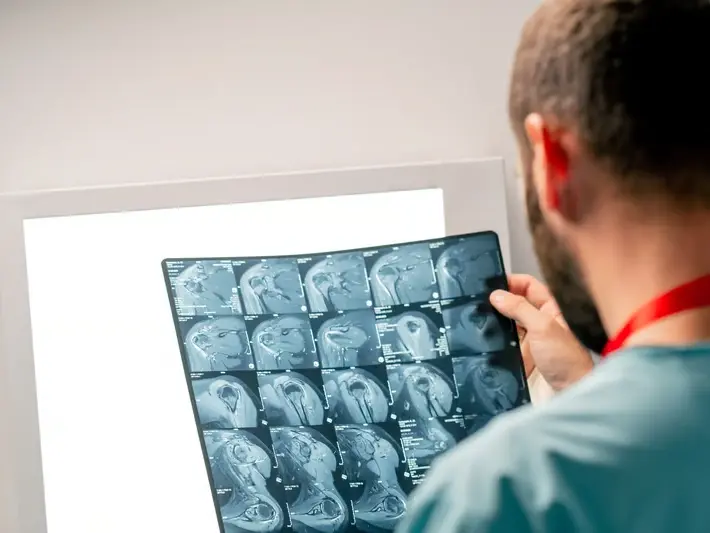
Doctors check for this problem. They ask about your health. They may use tests like MRI or CT scans.
These tests show where the problem is. They show how big it is. They show if it's pressing on nerves.
Why Herniated Disc Matters?
A herniated disc can hurt daily life. It can make sitting hard. It can make standing or walking hard too.
The pain can keep you from sleeping. It can lower your quality of life. It may cause weak muscles.
It can also lower your reflexes. This happens if the nerve is pressed hard. It also happens if it's not treated.
Early help is important. It stops long-term nerve damage. It can keep you from needing surgery.
Most herniated discs get better. They improve with rest. They improve with physical therapy too.
Chiropractic care can help. These treatments lower swelling. They take pressure off the nerve.
They make your spine muscles stronger. If these don't work, shots or surgery may help. Knowing about the problem helps you decide.
It helps you know when to see a doctor.
When Herniated Disc Matters Most?
Herniated discs worry doctors most when symptoms are bad. They worry when pain won't stop. They worry when you feel weak.
They worry when numbness gets in the way. Some signs mean you need help fast. These include losing control of your bladder.
They include weak legs. They include numbness in your groin. These may mean a serious problem.
That problem is called cauda equina syndrome. You need help right away if this happens.
People with hard jobs get this more. People who play sports get it too. People who lift a lot get it more.
Aging makes discs wear out. This makes herniated discs more common after 30. Early help can manage symptoms.
It can stop more injury. Chiropractic care can help. Physical therapy can help too.
Changing how you live can help. Good posture keeps your spine safe. So does the right chair.
Lift things the right way. This keeps your spine from getting hurt.