Glossary

What is Lumbar Spine?

Lumbar Spine is the lower section of the human spine, consisting of five large vertebrae labeled L1 through L5. These bones support the weight of the upper body, enable bending and twisting. And protect the spinal cord and nerves that connect to the legs and lower organs.

Reviewed by ChiropractorNashville.comSources reviewed: American Chiropractic Association, National Institute of Arthritis and Musculoskeletal and Skin Diseases

Quick Facts About Lumbar Spine

Category

Spinal anatomy

Used for

Weight bearing and movement

Common confusion

Often mistaken for the thoracic or sacral spine

Also called

Lower Back, Lumbar Vertebrae

Often discussed with

Back Pain Treatment, Work Injury Treatment

Key Takeaways About Lumbar Spine

Understanding Lumbar Spine
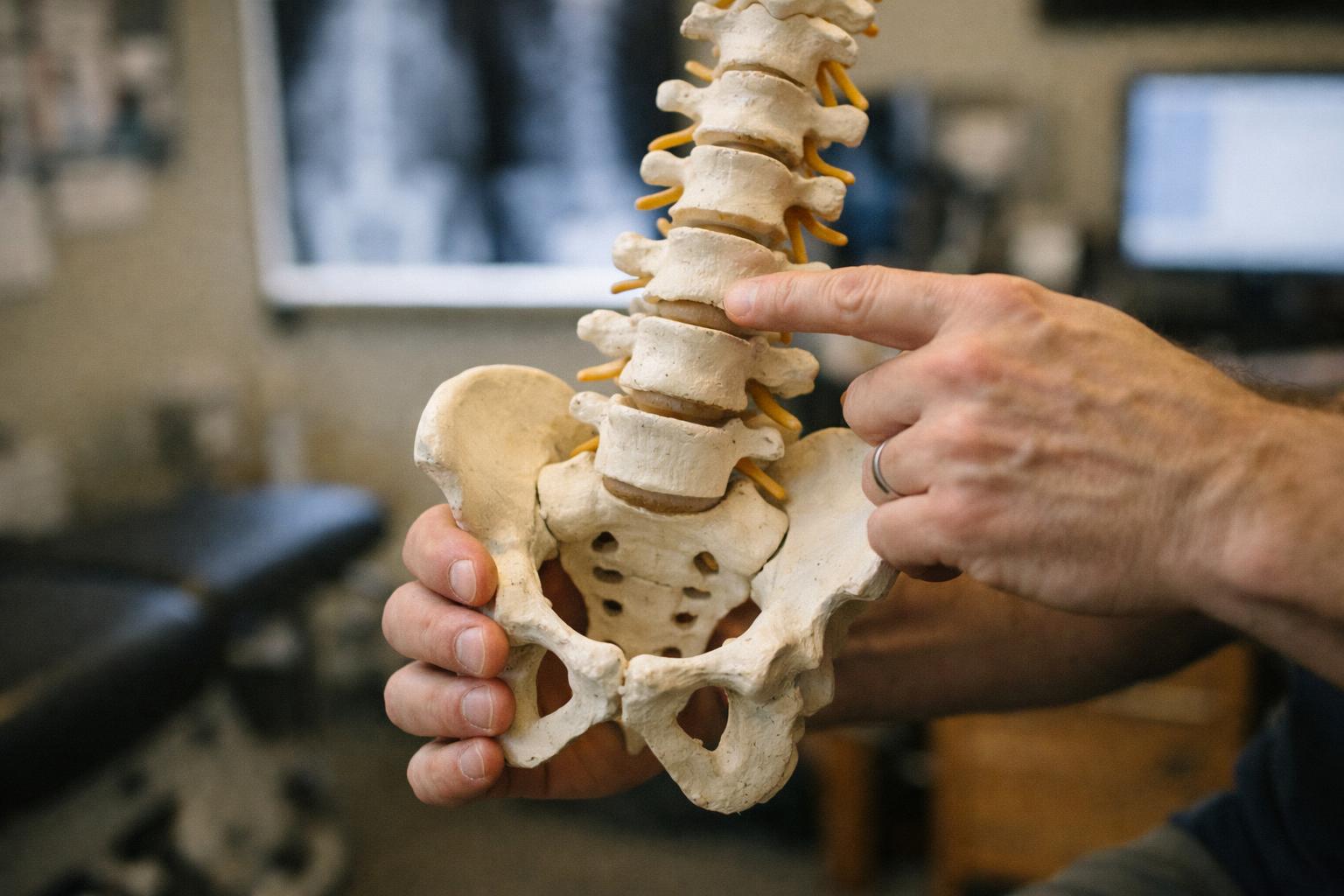
Lumbar Spine in Chiropractor: Lumbar Spine is the lower section of the human spine, consisting of—visual guide

The lower back has five big bones. These bones are called lumbar vertebrae.

Related glossary terms: Herniated Disc, Sciatica, Spinal Adjustment.

They sit between your ribs and your hips. Each one is bigger than bones in your upper back.

This is because they hold more weight. The curve in your lower back is called lordosis.

This curve helps spread out forces. It happens when you stand, walk. Or lift.

It also makes room for nerves. These nerves go to your legs and bladder.

The lower back carries most of your weight. So it can wear out or get hurt.

Common problems are herniated discs (bulging cushions). Another is spinal stenosis (narrowing space for nerves).

Muscle strains also happen. These can cause pain in your butt, thighs. Or legs.

Knowing about the lower back helps. It shows why back pain is common.

It also shows why good posture matters. Proper lifting keeps your back safe.

How Lumbar Spine Works?

The lower back holds you up. It also lets nerves pass through.

The bones connect with facet joints. These joints let you move.

Discs sit between the bones. They act like shock absorbers.

When you bend forward, discs squeeze. They spread out when you bend back.

This helps you tie shoes or lift things. It helps you get out of a chair.

The spinal cord ends near the top. But nerves keep going down.

They form a bundle called the cauda equina (horse's tail). These nerves leave through small holes.

A bulging disc can press on a nerve. So can a bone spur (extra bone growth).

This can cause pain or numbness. It can make your legs feel weak.

When the sciatic nerve is hurt, it’s called sciatica. Chiropractors check your movement.

They also check your reflexes. They test how your nerves feel.

Why Lumbar Spine Matters?

How Lumbar Spine applies to Chiropractor services in Nashville, United States—practical illustration

Your lower back helps with every move. It helps you stand up straight.

Without it, lifting would be risky. Even light things would be hard to pick up.

The nerves in your lower back control your legs. They also control your bladder.

Problems here can hurt your life. Back pain is a top reason people miss work.

It’s also why many see a doctor. So the lower back is key in healthcare.

To avoid injuries, strengthen your core. Keep a healthy weight.

Use good posture when lifting. If you get hurt, treatments can help.

Chiropractic care can ease pain. So can physical therapy.

Spinal decompression (stretching the back) also helps. Knowing about your lower back helps you choose care.

When Lumbar Spine Matters Most?

Your lower back works hard when you lift. It also works when you bend.

Sitting too long can strain it. Jobs like construction stress the back.

Nurses lift people. So their backs hurt too. Office workers sit for hours.

Without good support, their backs can ache. Athletes also risk back injuries.

Sports like weightlifting or football hurt backs. So does gymnastics.

Pregnant women’s backs change. Their center of gravity shifts.

Hormones loosen their ligaments. Aging also affects the back.

Discs dry out over time. Bones can get arthritis.

Watch for early signs. Stiffness or numbness can mean trouble.

Pain that shoots down legs is a warning. See a chiropractor if this happens.

They can find problems early. This is key for people at risk.
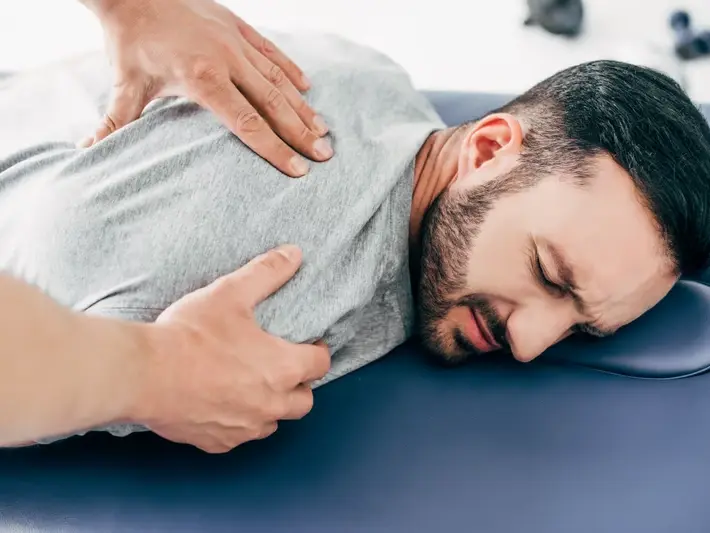
How to Evaluate Lumbar Spine?

Related Concepts Compared

Lumbar Spine vs. Thoracic Spine

The thoracic spine is the middle section of the spine, attached to the rib cage. And has less movement than the lumbar spine.

Lumbar Spine vs. Sacrum

The sacrum is a triangular bone below the lumbar spine that connects to the pelvis. While the lumbar spine consists of movable vertebrae.

Lumbar Spine vs. Herniated Disc

A herniated disc is a specific injury where a lumbar disc bulges or ruptures. While the lumbar spine refers to the entire lower back region.

Expert Note

The lumbar spine’s natural curve is essential for shock absorption. But excessive lordosis—or a flat back—can increase stress on discs and joints. Balance in posture and muscle strength is key to long-term spine health.

Common Mistakes or Myths About Lumbar Spine

  • Ignoring early signs of lumbar strain, like stiffness or mild pain.
  • Assuming all lower back pain comes from muscle strain, missing nerve or disc problems.
  • Using heat on acute injuries instead of ice, which can increase swelling.
  • Lifting heavy objects with a rounded back instead of bending the knees.
  • Sitting for hours without taking breaks to stretch or walk.

Lumbar Spine in Practice: A Real-World Example

A warehouse worker lifts heavy boxes without bending his knees. Over time, the strain on his lumbar spine causes a herniated disc, leading to sciatic pain down his leg. After chiropractic adjustments and physical therapy, he learns proper lifting techniques to protect his lower back.

Related Services

Related Terms

Herniated Disc

Herniated Disc is a spinal condition where the soft, gel-like center of a spinal disc pushes through a tear in the disc’s tougher outer layer. This can press on nearby nerves, causing pain, numbness. Or weakness in the back, arms. Or legs. Herniated discs often occur in the lower back or neck and may result from injury, aging. Or improper lifting.

Sciatica

Sciatica is sharp, burning pain that radiates along the path of the sciatic nerve, which runs from the lower back through the hips, buttocks. And down each leg. Sciatica typically affects only one side of the body and often results from a herniated disk, bone spur. Or spinal stenosis compressing part of the nerve.

Spinal Adjustment

Spinal Adjustment is a hands-on procedure performed by a chiropractor to apply controlled force to a specific joint in the spine. The goal is to improve spinal motion, reduce nerve irritation. And restore function without surgery or medication. Adjustments are often used to relieve back pain, neck pain. And headaches caused by misaligned vertebrae or joint restrictions.

Nerve Compression

Nerve Compression is a condition where surrounding tissues, such as bones, cartilage, muscles. Or tendons, press against a nerve, disrupting its normal function. This pressure can cause pain, tingling, numbness. Or weakness in the area served by the affected nerve. Nerve Compression often occurs in areas where nerves travel through narrow spaces, like the spine or wrists.

Chiropractic Care

Chiropractic Care is a health care profession focused on diagnosing and treating musculoskeletal disorders, particularly those related to the spine. Chiropractic Care involves manual adjustments, spinal manipulations. And other non-invasive techniques to relieve pain, improve mobility.

ChiropractorNashville.com

Have Questions About Lumbar Spine?

Contact ChiropractorNashville.com for practical guidance on Lumbar Spine and related chiropractor work in Nashville.

+1 615-777-0624