Glossary

What is Disc Herniation?

Disc Herniation is a spinal condition where the soft, gel-like center of a spinal disc pushes through a tear in the disc’s tough outer layer. This can irritate nearby nerves, causing pain, numbness. Or weakness in the back, neck, arms. Or legs. Disc herniation often results from aging, injury. Or repetitive strain on the spine.

Reviewed by Advanced Injury Care ClinicSources reviewed: American Academy of Orthopaedic Surgeons, Mayo Clinic

Quick Facts About Disc Herniation

Category

Spinal injury

Used for

Diagnosing nerve-related pain or weakness

Common confusion

Often mistaken for muscle strain or general back pain

Also called

Herniated Disc, Slipped Disc

Often discussed with

Back Pain Treatment, Work Injury Treatment

Key Takeaways About Disc Herniation

Understanding Disc Herniation
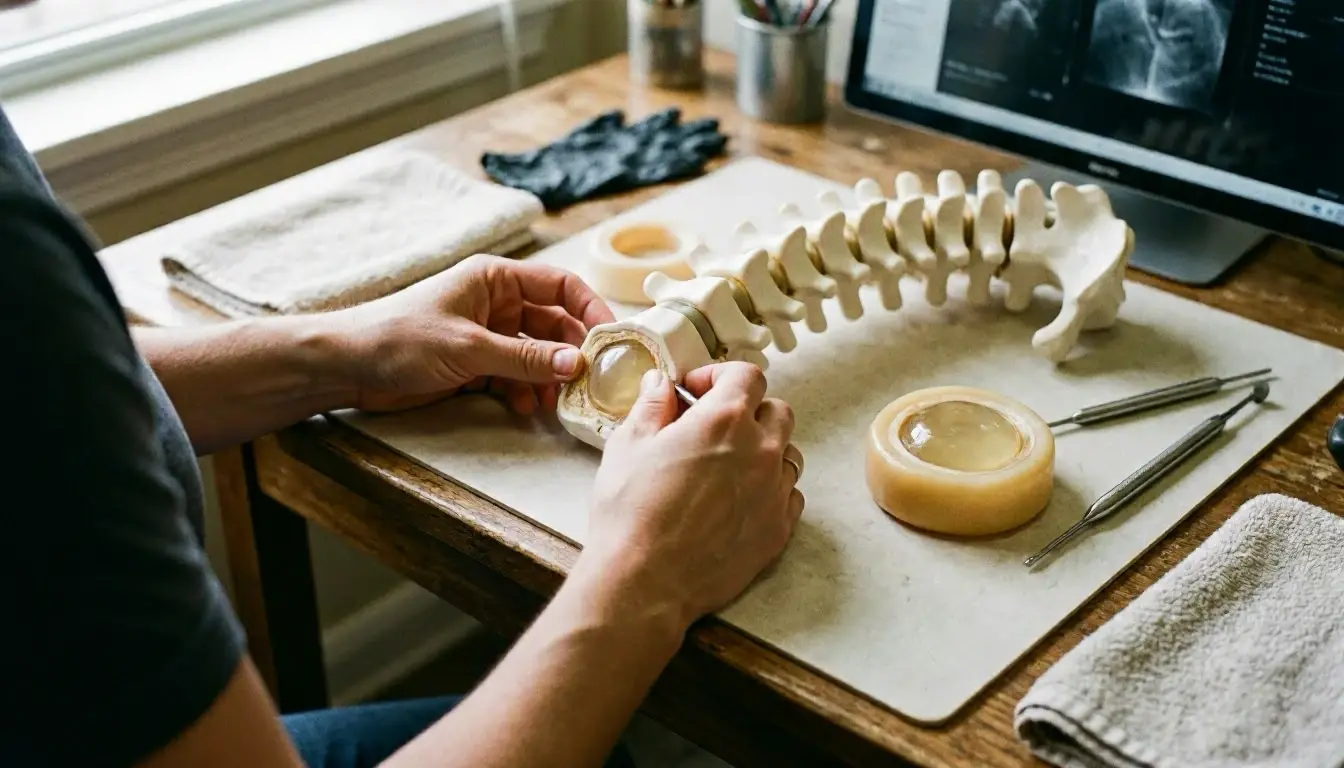
Disc Herniation in Chiropractor: Disc Herniation is a spinal condition where the soft, gel-like center of—visual guide

Your spine has small cushions between bones. These are called discs. They help your back move and bend.

Related glossary terms: Sciatica, Spinal Manipulation, Chiropractic Care.

Each disc has a tough outer ring. Inside is soft, gel-like material. The outer ring can tear or weaken.

When it tears, the soft part pushes out. This is called a herniation (a bulge). The bulge can press on nerves.

This causes pain, tingling. Or weak muscles. The pain happens where the nerves go.

Disc herniation can happen anywhere in your spine. It most often hits the lower back or neck.

The lower back holds most of your body’s weight. That makes it wear out faster.

Your neck holds up your head. It moves a lot. So it can get hurt too.

Symptoms change based on where the herniation is. You may feel pain in one spot or down your arms or legs.

You might also feel numb or weak. This happens in the areas the nerves reach.

How Disc Herniation Works?

Discs start to wear out over time. This is called disc degeneration (slow breakdown).

The discs lose water and get stiff. They can’t bend as well and get hurt easier.

Lifting heavy things or moving wrong speeds this up. The outer ring can crack or tear.

When it tears, the soft inside leaks out. This makes a herniation.

The bulge can press on a nerve or spinal cord. This causes swelling and pain.

Doctors find disc herniation in a few ways. They ask about your pain and check your body.

They test your reflexes and strength. This shows if nerves are hurt.

They may use MRI or CT scans (special pictures). These show the herniation and where it is.

These tests help rule out other problems. Other issues can cause pain too.

Why Disc Herniation Matters?
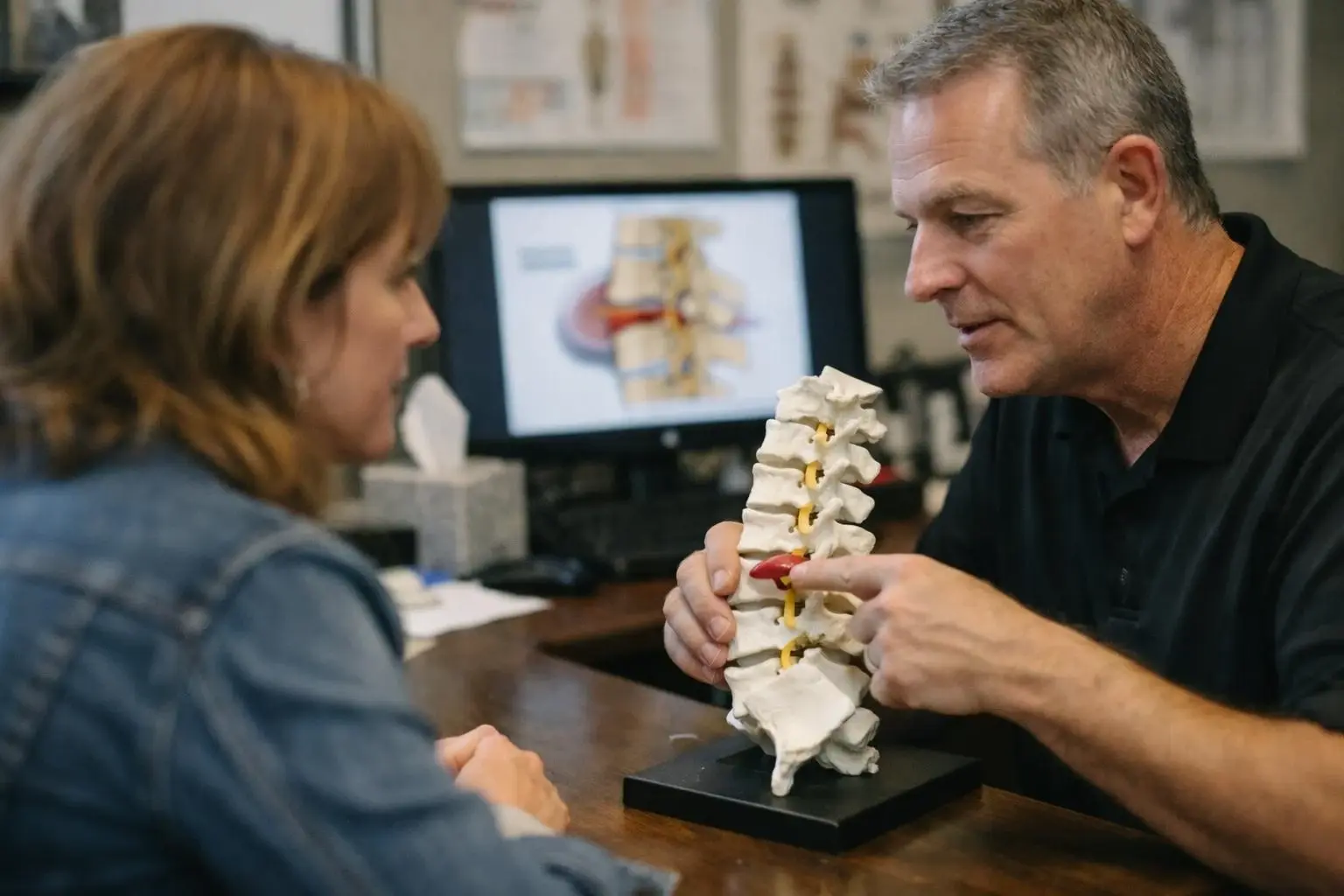
How Disc Herniation applies to Chiropractor services in Nashville, United States—practical illustration

A herniated disc can change your daily life. It can make moving hard and cause long pain.

It can hurt to sit, stand, walk. Or lift. Some people can’t do normal tasks.

In bad cases, you might lose bladder or bowel control. This is an emergency. Get help fast.

Finding and treating it early helps. You’ll heal faster and have less pain.

Pain and trouble moving affect your mind too. You might feel sad, worried. Or upset.

Getting help early makes this better. You’ll feel happier and more in control.

Treatments like chiropractic care help. So do physical therapy and medicine.

These can ease pain and help you heal. You won’t need surgery most times.

When Disc Herniation Matters Most?

Disc herniation matters when it hurts nerves. Pain can stop you from daily tasks.

People with tough jobs may struggle. Construction or nursing workers feel it most.

Athletes may also slow down. Pain makes training or competing hard.

Quick treatment helps them get back to work or sports.

Car crashes or falls can cause herniated discs. The hurt might not show right away.

Pain or numbness can start later. See a doctor even if it seems small.

Early help stops long-term problems. This is key for work injuries or accidents.

Getting checked fast helps with claims or cases too.

How to Evaluate Disc Herniation?

Related Concepts Compared

Disc Herniation vs. Bulging Disc

A bulging disc occurs when the disc’s outer layer protrudes evenly without tearing. While a herniated disc involves a tear and leakage of the inner material.

Disc Herniation vs. Sciatica

Sciatica is a symptom of nerve irritation, often caused by a herniated disc. But it can also result from other spinal conditions like spinal stenosis.

Disc Herniation vs. Degenerative Disc Disease

Degenerative disc disease involves gradual wear and tear of the discs over time. While disc herniation is often a sudden event caused by injury or strain.

Expert Note

Disc herniation is not always painful—many people have herniated discs without symptoms. The key factor is whether the herniated material is pressing on a nerve or the spinal cord. Early intervention can prevent minor herniations from becoming chronic issues.

Common Mistakes or Myths About Disc Herniation

  • Assuming all back pain is caused by a herniated disc—many conditions, like muscle strains or arthritis, can cause similar symptoms.
  • Ignoring symptoms like numbness or weakness, which may indicate nerve involvement and require prompt medical attention.
  • Believing surgery is the only treatment option—most herniated discs improve with non-surgical care like rest, physical therapy. Or chiropractic adjustments.
  • Continuing activities that worsen symptoms, such as heavy lifting or prolonged sitting, which can delay healing.

Disc Herniation in Practice: A Real-World Example

After lifting a heavy box at work, a construction worker begins experiencing sharp pain in his lower back that radiates down his leg. An MRI reveals a herniated disc pressing on a nerve root. With rest, chiropractic adjustments. And physical therapy, his symptoms gradually improve over several weeks.

Sources & Further Reading on Disc Herniation

Related Services

Related Terms

Sciatica

Sciatica is nerve pain that starts in the lower back and travels down one leg, often caused by pressure on the sciatic nerve. Sciatica usually feels sharp, burning. Or electric-like and may include numbness or weakness. The pain follows the path of the sciatic nerve, which runs from the lower spine through the hips and down each leg.

Spinal Manipulation

Spinal Manipulation is a hands-on treatment technique used by chiropractors and other trained healthcare providers to improve spinal movement and reduce pain. It involves applying controlled force to joints in the spine that have become restricted in their motion, often due to injury, poor posture. Or repetitive stress. The goal is to restore proper alignment, ease muscle tension. And support the body’s natural healing process.

Chiropractic Care

Chiropractic Care is a healthcare discipline focused on diagnosing and treating musculoskeletal disorders, particularly those related to the spine. Chiropractic Care emphasizes manual adjustments, spinal manipulation. And other non-surgical techniques to alleviate pain, improve mobility.

Decompression Therapy

Decompression Therapy is a non-surgical, traction-based treatment designed to relieve pressure on spinal discs and nerves. It involves gently stretching the spine using a motorized table or device to create negative pressure within the discs, promoting healing and reducing pain from conditions like herniated discs, sciatica. And chronic back pain.

Advanced Injury Care Clinic

Have Questions About Disc Herniation?

Contact Advanced Injury Care Clinic for practical guidance on Disc Herniation and related chiropractor work in Nashville.

+1 615-777-0624