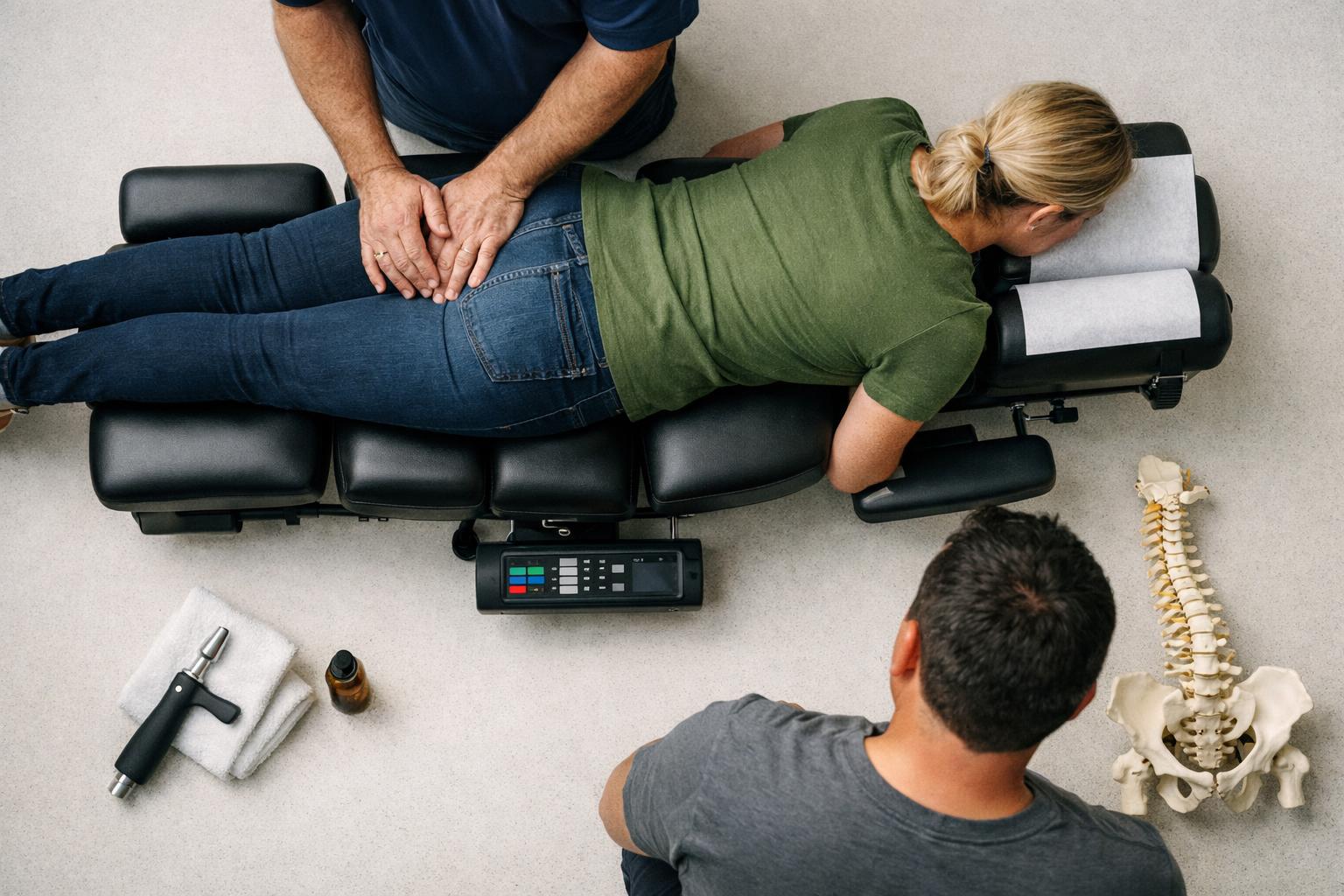
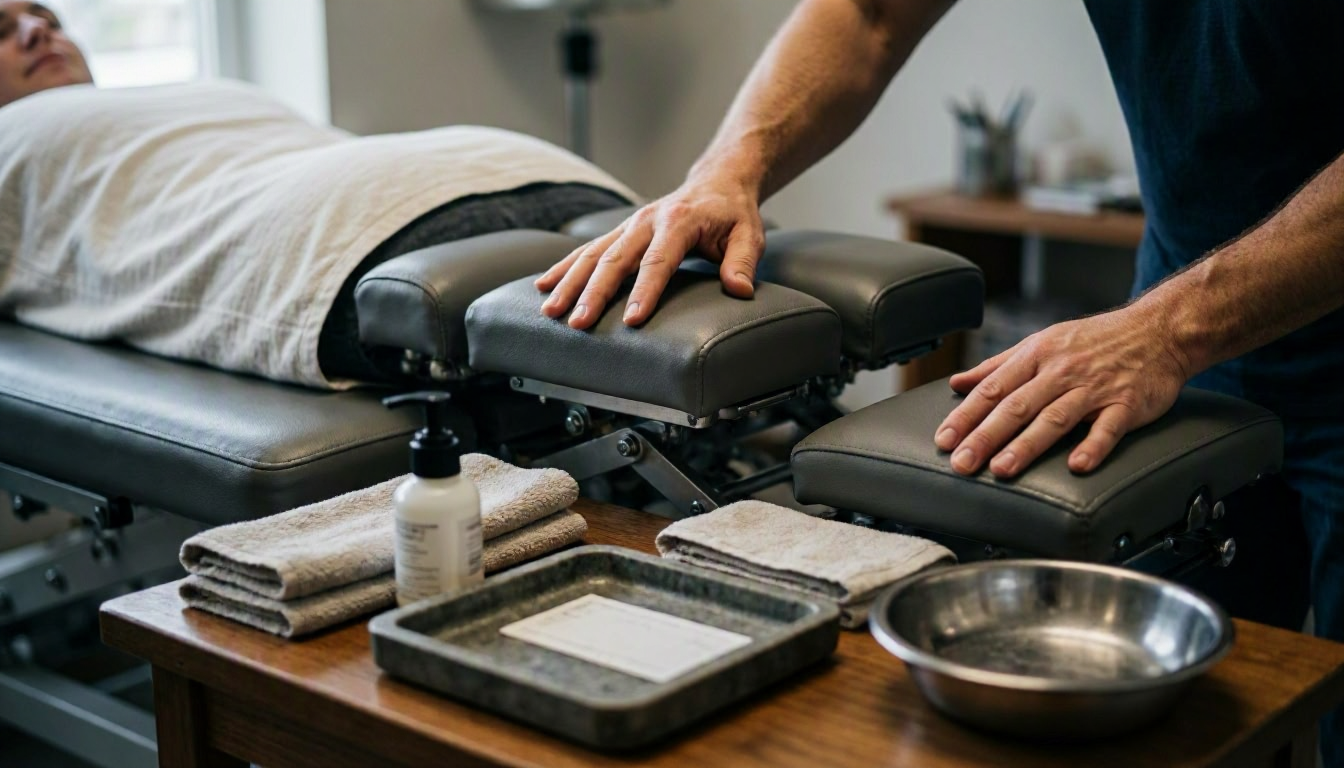
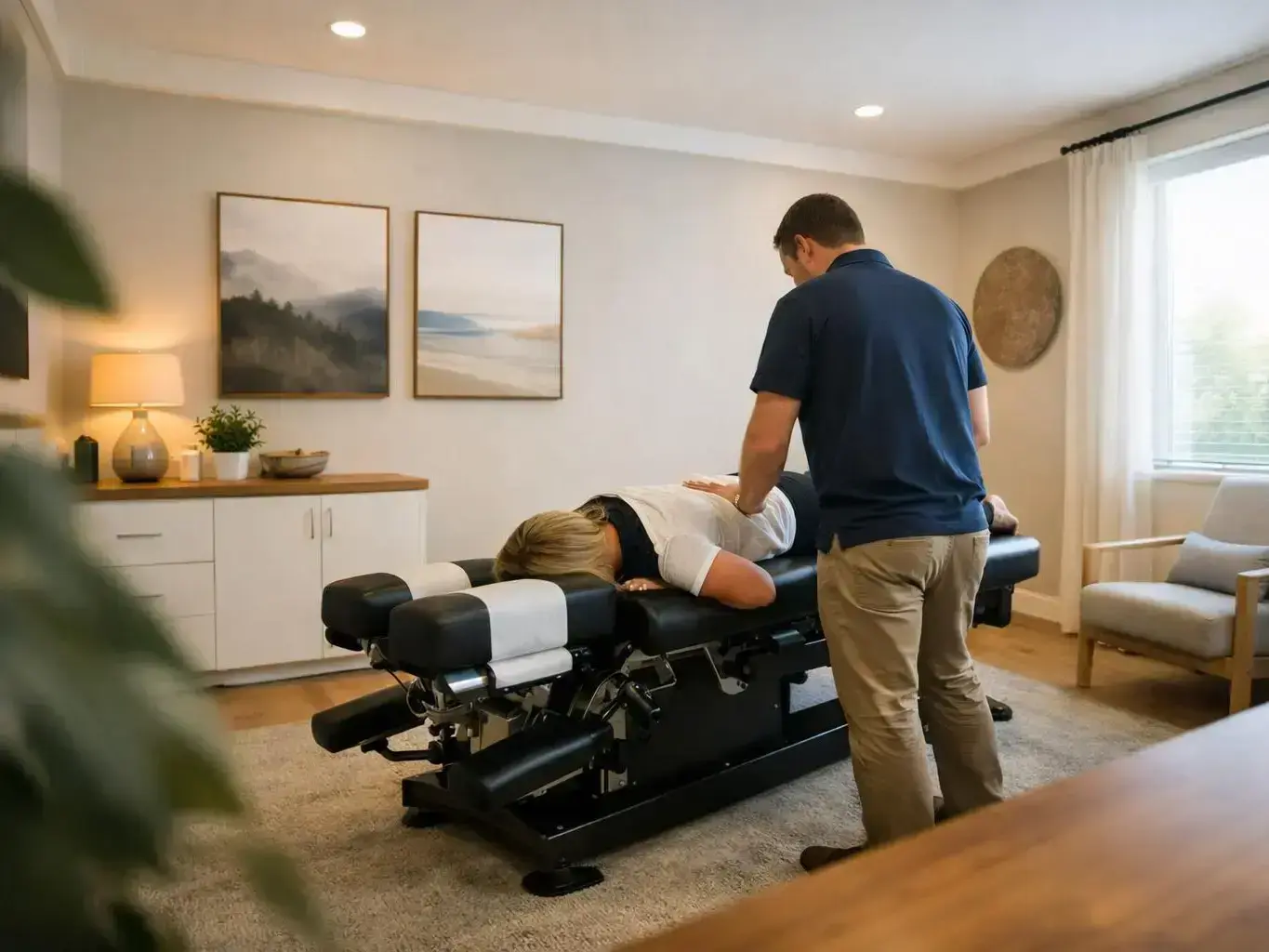
Chiropractic Table is a specialized medical device designed to support patients during chiropractic adjustments and therapies. Chiropractic Tables allow precise positioning, controlled movement. And targeted pressure to the spine, joints. And soft tissues. They often include adjustable sections, drop mechanisms. Or traction features to enhance treatment effectiveness and patient comfort.
Category
Medical equipment
Used for
Chiropractic adjustments and therapies
Common confusion
Often mistaken for massage tables or physical therapy benches
Also called
Adjustment Table, Chiropractic Adjusting Table
Often discussed with
Back Pain Treatment, Work Injury Treatment

A Chiropractic Table is key in clinics. It's not like a regular exam table. It helps with spine and joint fixes.
Related glossary terms: Chiropractic Adjustment, Spinal Manipulation, Flexion-Distraction Technique.
These tables give stability. They allow controlled moves. They also have special pressure spots. This helps chiropractors work safely.
Many tables have drop sections. Some have traction (pulling force). These help with different treatments.
Chiropractic Tables come in many styles. Each style fits a different treatment. Some have fixed surfaces.
Others have moving parts. This design helps both patients and chiropractors. It makes sessions easier.
A good table lets chiropractors reach the spine better. It helps with neck or other areas too.
Chiropractic Tables hold patients in the right spot. A drop-table lets part of the table drop fast.
The chiropractor pushes down. The table drops. This gives a quick, strong push to the spine.
It helps without extra work. Other tables stretch the spine gently. This can help nerves or discs.
The table parts can move. Some tables move the headrest. Others move the legs or middle.
This helps chiropractors place patients right. They can do side fixes or back stretches.
The padding keeps patients comfy. It also helps chiropractors reach the area they need.

The right table makes treatment better. It helps chiropractors work more carefully.
This lowers the chance of hurt or pain. Drop-tables give a quick, strong push to one spot.
This works better than hands alone. It's key for discs or pinched nerves.
Tables help local patients too. The padding and moves make patients comfy.
This helps them relax. It makes the fix go smoother.
For chiropractors, good tables mean less tiredness. They can work all day without strain.
This mix of safety, comfort. And help makes tables very important.
Chiropractic Tables help most with careful fixes. They work well for spine issues.
They also help with slipped discs or sciatica (leg nerve pain). Tables with drop parts help a lot.
So do tables with traction. These tools hit the right spot without extra strain.
Some patients can't move well. Others need to lie a certain way. Tables with moves help them too.
Some clinics use special methods. Like the Thompson Drop Technique. Or flexion-distraction (gentle spine stretch).
The right table makes these work better. A stretch table helps chiropractors pull the spine gently.
This can help nerves. It can also help discs get water back. Without the right table, these fixes don't work as well.
They're also harder to do safely. So picking the right table is very important.
Chiropractors think about this when they start. They also think about it when they add new services.
Massage Tables are designed for relaxation and soft tissue work. While Chiropractic Tables include features like drop mechanisms or traction for spinal adjustments.
Physical Therapy Benches focus on exercise and rehabilitation, whereas Chiropractic Tables are built for precise joint and spinal manipulations.
A high-quality Chiropractic Table is an investment in both patient outcomes and practitioner longevity. The right table can enhance technique precision, reduce clinician fatigue. And improve patient comfort, which are all critical for effective chiropractic care.
During a session for a patient with lower back pain, a chiropractor uses a Chiropractic Table with a drop mechanism. The chiropractor positions the patient on their side and applies a quick thrust to the lumbar spine. The table’s drop section lowers slightly, helping to realign the vertebrae with minimal force. This technique reduces discomfort and improves the effectiveness of the adjustment.
Chiropractic Adjustment is a hands-on procedure where a licensed chiropractor applies controlled force to a specific joint, usually in the spine, to improve alignment, reduce pain. And restore movement. The adjustment often produces a popping sound caused by gas releasing from the joint, which is normal and not painful.
Spinal Manipulation is a hands-on technique used by chiropractors and other trained healthcare providers to apply controlled force to a joint in the spine. The goal is to improve spinal motion, reduce pain. And restore function by realigning vertebrae that may be misaligned or restricted in movement. It is often accompanied by a popping or cracking sound caused by gas bubbles releasing from the joint.
Flexion-Distraction Technique is a gentle, non-surgical chiropractic method used to treat back pain, herniated discs. And spinal stenosis. Flexion-Distraction Technique involves a specialized table that stretches and flexes the spine in a rhythmic motion, reducing pressure on spinal discs and nerves while improving mobility.
Thompson Drop Technique is a gentle chiropractic adjustment method that uses a specialized table with padded sections that drop slightly during the adjustment. This technique helps reduce joint restrictions in the spine and other areas by combining a quick thrust with the natural drop of the table, making the adjustment more comfortable and precise for patients.
Spinal Decompression is a non-surgical treatment method designed to relieve pressure on the spine and spinal nerves. It uses gentle stretching or mechanical traction to create space between vertebrae, reduce disc herniation. And promote healing of damaged spinal discs and surrounding tissues. The procedure aims to alleviate back pain, sciatica. And other nerve-related symptoms.
ChiropractorNashville.com
Contact ChiropractorNashville.com for practical guidance on Chiropractic Table and related chiropractor work in Nashville.